Τρίτη 18 Ιουλίου 2023, Elite City Resort, Καλαμάτα, Εδώ το Πρόγραμμα του Φόρουμ!

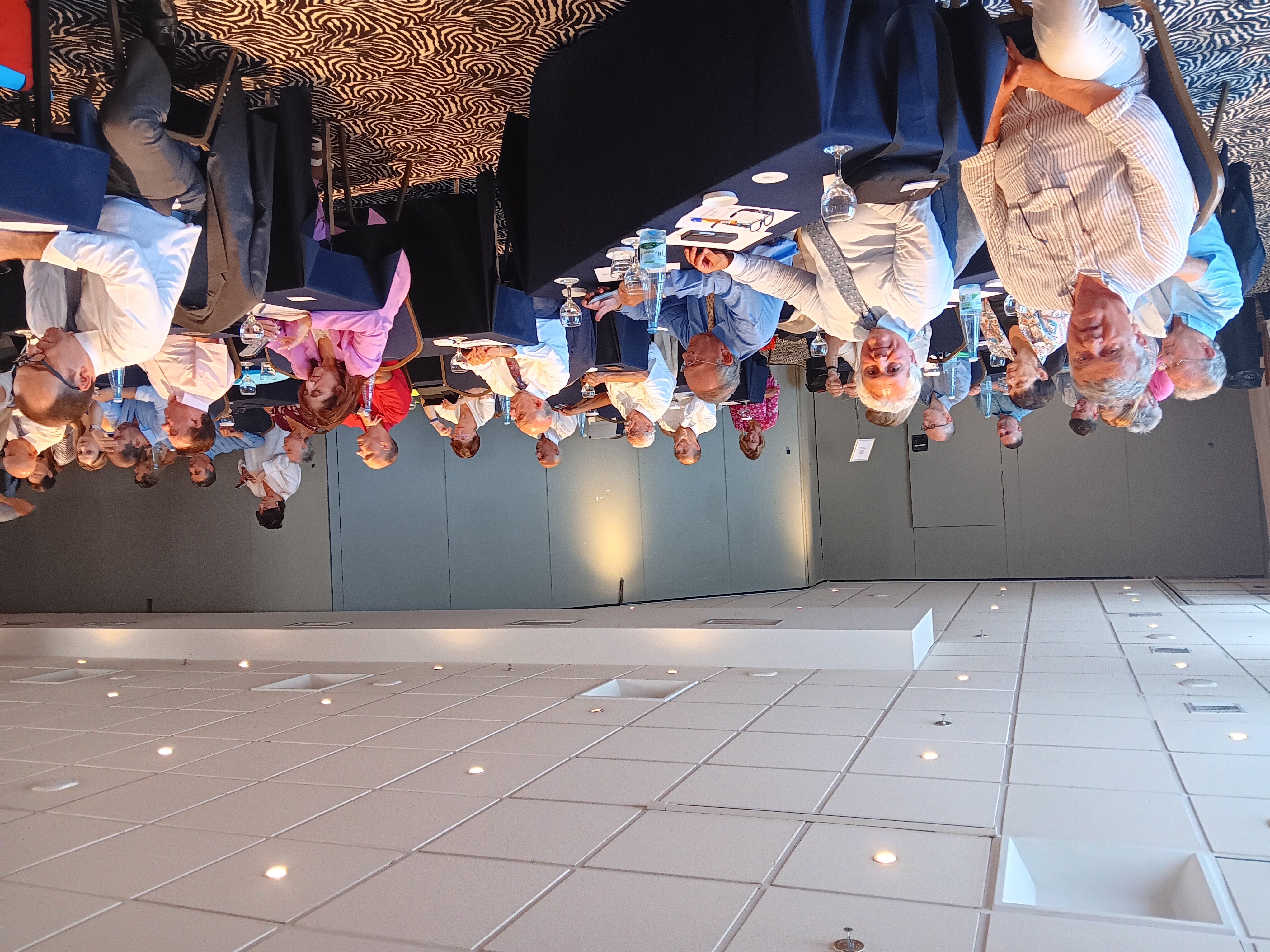
Συνέδριο για την Ενέργεια και την Κλιματική Αλλαγή πραγματοποιήθηκε στην Καλαμάτα με τίτλο: «Climate Crisis & Green Energy Forum», με πλήθος συμμετοχών Ελλήνων της Ομογένειας. Το συνέδριο διοργάνωσε η Παγκόσμια Διακοινοβουλευτική Ένωση Ελληνισμού (Πα.Δ.Ε.Ε.) – World Ηellenic Inter-Parliamentary Association (W.H.I.A.), υπό την αιγίδα του Ινστιτούτου Ενέργειας ΝΑ Ευρώπης (ΙΕΝΕ), του Κέντρου Ανανεώσιμων Πηγών Ενέργειας (ΚΑΠΕ), του Δήμου Καλαμάτας και της Περιφέρειας Πελοποννήσου.

Η Παγκόσμια Διακοινοβουλευτική Ένωση Ελληνισμού (Πα.Δ.Ε.Ε.) αποτελεί οργανισμό ο οποίος συστάθηκε το 1996 με πρωτοβουλία της ελληνικής κυβέρνησης. Απαρτίζεται από νυν και πρώην ελληνικής καταγωγής βουλευτές νομοθετικών σωμάτων της αλλοδαπής και έχει ως σκοπό: α) την επικοινωνία και ανάπτυξη των σχέσεων των εν λόγω βουλευτών με τη Βουλή των Ελλήνων, β) την ενδυνάμωση των σχέσεων φιλίας και συνεργασίας με την Ελλάδα και την ανάπτυξη κοινής στρατηγικής σε ζητήματα ελληνικού ενδιαφέροντος, και γ) την προαγωγή και διάδοση του ελληνικού πολιτισμού και της ελληνικής γλώσσας.

Στο πλαίσιο αυτό, η Πα.Δ.Ε.Ε. συνεργάζεται στενά με την Ειδική Μόνιμη Επιτροπή Ελληνισμού της Διασποράς της Βουλής των Ελλήνων για την προώθηση θεμάτων που αφορούν στον απόδημο ελληνισμό.

Σύμφωνα με το καταστατικό λειτουργίας, το Διοικητικό Συμβούλιο της Πα.Δ.Ε.Ε. συνεδριάζει στην Ελλάδα μία έως δύο φορές ετησίως, ενώ η Γενική Συνέλευση πραγματοποιείται κάθε δύο έτη στην Αθήνα. Έως σήμερα η Γενική Συνέλευση της Πα.Δ.Ε.Ε. έχει υιοθετήσει σημαντικά ψηφίσματα για την υποστήριξη ελληνικών θεμάτων σε διεθνές επίπεδο.
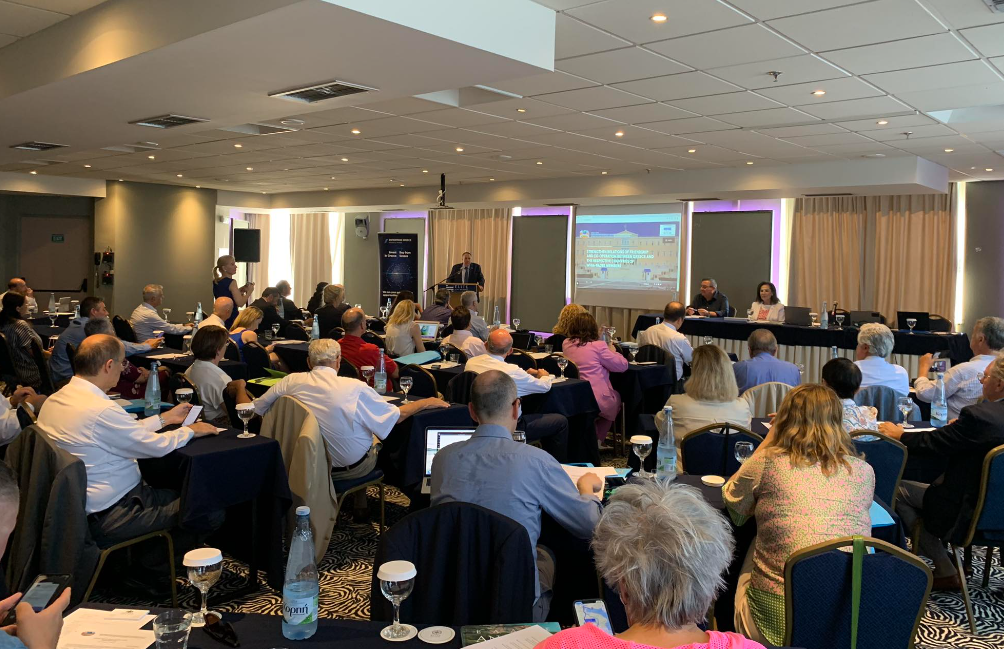
Σε δηλώσεις, στο περιθώριο του συνεδρίου, ο Δήμαρχος Καλαμάτας Θανάσης Βασιλόπουλος επισήμανε: «Xαιρόμαστε πάρα πολύ που είμαστε εδώ και επέλεξαν την πόλη μας για να πραγματοποιήσουν το συνέδριό τους για την Κλιματική Αλλαγή. Ένα συνέδριο τόσο επίκαιρο, καθώς τα πράγματα αλλάζουν γύρω μας, και πρέπει να δείξουμε όλοι μας τον καλύτερό μας εαυτό και να καταθέσουμε προτάσεις και ιδέες για να προστατεύσουμε το περιβάλλον μας. Χαίρομαι, κύριε πρόεδρε, που μετά τη συνάντησή μας στη Βοστώνη, πριν από έναν περίπου χρόνο, αυτό το συζητήσαμε από τότε, μου το προτείνατε ότι θα είστε εδώ, και πλέον το υλοποιήσατε, και φιλοξενήστε στην πόλη μας».
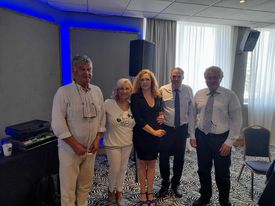
Με τη σειρά του ο πρόεδρος της Παγκόσμιας Διακοινοβουλευτικής Ένωσης Ελληνισμού, Λεωνίδας Ραπτάκης, είπε: «Είναι πολύ μεγάλη τιμή που είμαστε σήμερα εδώ στην Καλαμάτα. Έχουμε πολλά μέλη που είμαστε εκλεγμένοι στο εξωτερικό και έχουμε ρίζες εδώ στην Καλαμάτα. Και όπως είπε και ο Δήμαρχος, όλο αυτό που έχουμε ξεκινήσει, μετά την αδελφοποίηση των πόλεών μας, είναι πολύ σημαντικό. Σήμερα συζητάμε σοβαρά θέματα για την κλιματική αλλαγή να βρούμε λύσεις, γιατί το κλίμα μάς επηρεάζει και στην υγεία μας και στην οικονομική κατάσταση», δήλωσε μεταξύ άλλων ο πρόεδρος, αναφερόμενος και στα πύρινα μέτωπα που μαίνονται αυτές τις ώρες σε διάφορες περιοχές της χώρας, αλλά και στα κατά καιρούς ακραία καιρικά φαινόμενα, όπως υψηλές θερμοκρασίες, πλημμύρες κ.ά. «Είναι πολύ σημαντικό όπως επεσήμανε ότι η συζήτηση έχει ήδη ξεκινήσει από εδώ την Καλαμάτα, την Πελοπόννησο με στόχο να εξευρεθούν οι βέλτιστες λύσεις για την αντιμετώπιση της κλιματικής κρίσης, και τη στροφή της ανθρωπότητας προς την πράσινη ενέργεια».
Το Κέντρο Αριστείας Ακρόπολις συμμετέσχε στο φόρουμ με την παρέμβαση του μέλους του Εκτελεστικού Συμβουλίου Υποναυάρχου Π.Ν. ε.α. Γεωργίου Τσόγκα και θέμα «Κρίσιμες προκλήσεις για την ασφάλεια της ενεργειακής υποδομής», η οποία έκανε μεγάλη εντύπωση και καταχειροκροτήθηκε από το ακροατήριο.

V.Adm George TSOGKAS HN address at WHIA Climate Crisis & Green Energy Forum: “Critical Energy Infrastructure Security Challenges”
Kalamata, 18 July 2023

Admiral Tsogkas started his presentation by highlighting the importance of Energy Security in the comprehensive effort to cope with the climate crisis and to understand the pertinent challenges related to it. In particular, he made explicit reference to the Critical Infrastructure and its associated security concerns.

He emphasized that security is a matter of perception; it requires proper attention in the planning and execution of any organization or institution dealing with climate and energy. It has to be considered as an issue of paramount importance which requires all domains’ approaches. Land, Maritime, Air and Cyber. He expressed his views that “land and air-to some extent- related issues” are more structured to be examined, because potential security incidents relate to sovereign rights, while the “maritime and cyber” are more difficult to address because of the nature of the incidents in those domains (i.e. open waters, difficult to spot the originators of a cyber crime etc) and in principle it is not always obvious if they hamper the sovereignty of the nation or its sovereign rights. On the contrary, if a cyber security incident has been proved, it may call for actions up to collective defence if considered as such within NATO context where the allies have agreed that this aggression falls under Article 5. He noticed that in the Maritime domain, the adopted approach is rather structured; and the approach to security is examined through the Maritime Security Operations 7 tasks with the understanding that not all of them “apply” at each case.

Then he highlighted the institutional approach undertaken by International Actors. Indicatively;
1/The US Department of Energy considers “climate action” along with “investments” among its priorities (comprehensive government and public sector approach);
2/The Organization for Security and Co-operation in Europe addresses the energy security problem (in five pillars) examining both economic and environmental approaches;
3/The EU has adopted an external energy policy aiming at a) strengthening its energy security, resilience and open strategic autonomy by diversifying its energy supply and boosting energy savings and efficiency, b) accelerating the global green and just energy transition to ensure sustainable, secure and affordable energy for the EU and the world and c) building long-lasting international partnerships and promote the EU clean energy industries across the globe. Its “REPowerEU” plan is to rapidly reduce dependence on Russian fossil fuels and fast forward the green transition of the Union;
4/NATO at its latest (2022) strategic concept addresses the issue and shows the willingness of the allies to work towards identifying and mitigating strategic vulnerabilities and dependencies, including with respect to critical infrastructure, supply chains and health systems. Additionally, it reflects their commitment to promoting energy security and investing in a stable and reliable energy supply, suppliers and sources, ensuring civil preparedness to provide for continuity of government, delivery of essential services to populations and civil support to armed forces. Through this, they will boost their own capacity to prepare for, resist, respond to, and quickly recover from strategic shocks and disruptions, and ensure the continuity of the Alliance’s activities. In parallel, the established NATO Energy Security Centre of Excellence in Vilnius, Lithuania has proactively addressed energy security-related issues as the “Subject Matter Expert” for the Alliance. Moreover, the recently established (operational by the end of 2023) NATO Climate Change and Security Centre of Excellence in Canada is expected to add value to this collective effort.

Admiral Tsogkas posed the critical question of “why security matters?” to recall the memory of the participants of the “Deep Water Horizon” oil rig spill (2010) on the north coast of the Gulf of Mexico, with its catastrophic implications, and he made parallelism that if such an incident would have happened off the coast of Kalamata and West Crete, then Greece would have lost for some good years its 20% of its GDP (due to loss of tourism) with unknown further consequences and implications! Additionally and in order to emphasize the security concerns he referred to two recent facts (both during the Russian aggression to Ukraine) i.e. the attack on Crimea’s Kerch bridge and the sabotage of the Nord Stream pipeline, examining solely the importance of energy security, leaving the politics out of question.
Finally, he expressed his concerns for potential low-profile- cases, like disrupting or putting out of order ships’ Navigation, Propulsion, Control, Electronic Charting, Integrated Communication Systems, including distress communications, or any other systems (ECDIS, GPS, AIS, SatCom) examining the unexpected consequences on terminals, receiving ports and relevant infrastructure at the aftermath of a cyber incident/ crime/attack.

Closing this section he brought to the participant's attention that the West via the Trans-Atlantic link is on a productive and effective track tackling the energy security issues in a comprehensive manner with solidarity and resolvement. EU with its funding mechanisms along with its energy dependency is a critical partner in this regard and should play a pivotal role.

He continued with the rather operational matters highlighting the importance of having timely decisions allowing provisions for adequate reaction times, the requirement for institutionalizing internal and external cooperation, the need for intelligence sharing when coping with emerging security challenges, the opportunity for utilization of innovative technologies and modern capabilities including artificial intelligence (AI) potentials, for a whole of space approach (on, under and above sea level) to act as a catalyst to defence, security, economy, environment and development interests. Also for the development, update and revision of the security plans for ports, pipelines, receiving stations, sea lines of communications, energy exploitation platforms, drilling ships, and relevant infrastructure and for the review and renewal of policy and plans (including defence and rules of engagement) for mitigating risks even from asymmetrical and hybrid threats. This demanding approach calls for urgent needs for educating own organizations, for considering the problem at tactical, operational, political and international levels.

Due to time constraints, he left some critical energy security questions for proper reflection by the attendees at his own discretion.
Admiral Tsogkas in his concluding remarks and prior to thanking the WHIA organizers, its President Senator L. Raptakis RI, the WHIA members present and all the participants for the opportunity, highlighted once more the importance of a Comprehensive Approach both for governmental and businesses actors, the requirement for an intense Operational Awareness and for demand for Political and Diplomatic Course of Action when approaching the Energy Security Challenges question.


 Η Σύνοδος Κορυφής του ΝΑΤΟ στο Βίλνιους –ενώ η λέξη Vilnius προέρχεται από το λιθουανικό vilnis που σημαίνει κύμα, η Σύνοδος δεν εξελίχθηκε σε τρικυμιώδη– της Λιθουανίας αποτελεί μία από τις σημαντικότερες της μεταψυχροπολεμικής περιόδου. Είναι γεγονός ότι μετά την εισβολή της Ρωσίας στην Ουκρανία η Ατλαντική Συμμαχία επανακαθορίζει το στρατηγικό της προσανατολισμό.

Μία πρώτη και γενική αποτίμηση, κατόπιν τεσσάρων Συνόδων Κορυφής του ΝΑΤΟ που ακολούθησαν την ρωσική εισβολή, αναδεικνύει την σταδιακή και κατά προτεραιότητα ευθυγράμμιση της Ατλαντικής Συμμαχίας με τις βασικές στρατηγικές επιλογές πρωτίστως των Ηνωμένων Πολιτείων και ακολούθως του Ηνωμένου Βασιλείου.

Προσπαθώντας λοιπόν να αποτυπώσουμε το νέο στρατηγικό προσανατολισμό του ΝΑΤΟ θα σταθούμε σε τρία σημεία: στις σχέσεις της Συμμαχίας με την Κίνα, τη Ρωσία και την Ευρωπαϊκή Ένωση.

Η συνέχεια ΕΔΩ!

EXECUTIVE SUMMARY: During most of the 20th century, the defense sector was the undeniable leader of technological innovation, with technology developed in defense labs often trickling into the civilian world. In the 1990s, however, due to a dramatic decrease in defense budgets and the streaming of funds to commercial applications led by startup companies and internet giants, the flow of innovation reversed direction. The defense sector has accordingly adopted an “Open Innovation” approach to exploit new technologies developed by the civilian sector.

Throughout human history, technological innovation has been a critical factor on the battlefield. Ever since the Industrial Revolution and the scientific breakthroughs of the 19th and 20th centuries, such innovation has been a major factor in all great military conflicts. The wars between the Great Powers propelled innovation by states that invested in large research and development (R&D) teams and facilities to obtain technological superiority. As a result, state defense sectors became the leaders and main implementers of technological innovation around the world. Technology developed for defense applications subsequently transitioned into the civilian sector and completely changed the face of human society. Some of these applications include the jet engine, modern electronics, nuclear energy, antibiotics, insecticides, the internet, cellular communication, blood banks, and GPS.


In the 1990s, as a result of far-reaching geopolitical changes, economic processes, and socio-cultural changes, the defense sector gradually ceded its leadership in technological innovation to the civilian sector. Today, a major proportion of this innovation is produced by the private civilian sector, with the state defense sector increasingly relying upon it rather than the other way around. The migration of technological innovation’s center of gravity from the state defense sector to the private civilian sector can be described as a shift of technological dominance. This shift has forced the defense sector to adapt and transform its main innovation strategy from closed innovation to open innovation.
Forms of innovation
Innovation is a multi-stage process whereby organizations transform ideas into new and improved products, services, or processes in order to advance, compete, and differentiate themselves successfully in the marketplace. There are three levels of innovation:
1. Incremental innovation deals with improving and upgrading something that already exists;
2. radical innovation refers to the introduction of completely new products, services, processes, or business models; and
3. disruptive innovation changes existing market rules and offers a brand new value pattern to the market, with the potential to affect other markets as well.
There are two strategies for implementing innovation in organizations:
1. Closed Innovation – This model is based on ideas that stem mostly from internal sources, as well as on the internal organizational application of the innovator’s development and realization processes.
2. Open Innovation – This modelrelies on sources both internal and external to the organization. The system generates new ideas by interacting and exchanging information with the wider environment in order to infuse new ideas and direct their implementation.

The past – The defense sector’s technological hegemony
World War I began with cavalry charges led by sword-wielding officers and ended with planes, tanks, machine guns, and toxic gas dominating the battlefield. The war broke out at a time when manufacturing and industrial capabilities were becoming significant, and as a result, considerable technological advances became available for widespread use.
Although the importance of technology on the battlefield was made abundantly clear during the First World War, it was the Second World War that significantly enhanced the connection between scientific research, technological development, industrialized production capabilities, and government mechanisms. The military relied more and more on technology-oriented warfare to determine the outcome of battle, including radar, wireless radio, fighter jets, heavy bombers, and ultimately the atomic bomb.
During the Cold War, the hectic technological race between the powers yielded advancements in many fields, including agriculture, biomedicine, ecology, geology, meteorology, seismology, oceanography, space and satellite exploration, navigation systems, genetics (including a detailed program for mapping the human genome), electronics, computers, communications, and perhaps the most influential of all, the internet.
As early as 1970, government institutions such as NASA (National Space and Aeronautics Organization) and the NIH (The National Institutes of Health) consumed about half the US government’s budget for R&D, with most of this sum meant to fund projects dealing with national security.
The present – The civilian sector’s technological hegemony
Over the past few decades, a much higher share of capital has flowed into the development of technologies whose primary purpose is to meet the needs of the civilian market. This change is evident when examining the total sums invested by the US in government R&D (a major part of which is defense R&D) in comparison to the investment in the civilian sector’s R&D. Until the late 1980s, government investment in R&D funding was very similar to that of private civilian R&D. However, since the 1990s a significant gap has opened up between the sectors, with private sector R&D benefiting by up to four times.
Today, cutting-edge technology is in the hands of giant civilian technology companies or startups, with the defense sector feeding, to a large extent, on innovations in the private sector in key areas. This shift in technological dominance was propelled by a combination of three main interrelated factors:
1. The decline of war between states and armed conflicts between Great Powers
The end of the Cold War and Great Powers competition led to a gradual reduction in defense research and development funds. The decline in the volume and intensity of wars led to the respective decline in investment in the development of defense and military technologies.
2. The age of startups
Startups can easily implement disruptive innovation due to their ability to adapt and change quickly, their relatively small size, and their high risk tolerance. The rapid growth of the startup community, based on open platforms and information sharing, provided a clear technological advantage to its members and offered unprecedented access to information in general and technology in particular.
3. The internet giants
The few startups that transformed into today’s technological giants dominate key areas of technology by investing great sums in R&D, which until several decades ago could only be invested by states. The R&D investment of each of the five leading technology companies is more than triple that of the biggest R&D-intensive defense companies, such as Boeing and Lockheed Martin.

The transition from Closed to Open Innovation
During most of the 20th century, the defense sector, which enjoyed strong funding and resources and the best minds in R&D, used the closed innovation model in its R&D activity. However, it suffered from a number of built-in barriers. One was binding conditions that are often cumbersome and onerous. Market opportunities are limited, and in most cases, the state demands full ownership of any resulting intellectual property. The second barrier is related to confidentiality and information security. Cooperation with commercial civil companies and the use of civil technology exposes a state defense sector to a significant threat: the availability of the very same technology to potential adversaries and the exposure of its limitations. The third barrier is bureaucratic. The defense sector is fundamentally different from dynamic and agile technology companies, which must fight for their survival in a competitive market. The defense sector has rigid and cumbersome engagement and procurement processes that lack the flexibility to partner with small companies, so it has tended toward long-term relationships with large, stable companies.
Given these factors, the model of closed innovation brought about the desired results, as long as the technological advantage was in the hands of the defense sector. Under these conditions, there was no incentive for the defense sector to overcome the built-in barriers.
With the end of the Cold War, however, and the subsequent loss of technological dominance in favor of the civilian sector, the defense sectors in many states began to reexamine their innovation models, and the open innovation model came to be seen as more appropriate to carry the defense sector into the 21st century.
In 2015, the US DoD announced the launch of the Third Offset Strategy – the creation of a significant technological lead over the US’s main rivals. As part of the program, the DoD seeks to achieve dominance in technological fields including robotics, artificial intelligence, autonomous systems, and advanced manufacturing technologies. According to the Third Offset strategy, the US DoD and the entire defense establishment must open communication channels with civilian companies and use their products, services, knowledge, and capabilities to develop the next generation of weapons systems.
Under President Trump’s administration, the term “Third Offset Strategy” fell out of favor, with Trump having made an electoral pledge to spend more on reinforcing current military forces. But the 2018 National Defense Strategy (which did not use the Third Offset Strategy label) and new operational concepts such as Multi-Domain Operations indicate that the relevance of military-technological overmatch is very much intact.
The program includes an impressive number of diverse ventures, among them a Defense Innovation Board, a National Security Innovation Network, and a Defense Innovation Unit. The role of these initiatives is to bridge the gap between the defense sector’s cumbersome processes and civilian hi-tech and startup companies’ business models. This entails openly publishing challenges and expediting the engagement process with companies that present feasible solutions, running innovation competitions and hackathons, engaging with researchers in academia, and much more.
At the beginning of the 21st century, the defense sector in Israel successfully identified this shift in technological dominance. This was followed by a change in the perception of defense innovation and an embrace of open innovation as a sustainable model. Like the US, Israel has invested a considerable effort in utilizing civilian technology for defense applications. Several channels have been established for this purpose. DDR&D (Directorate of Defense Research & Development), the unit in charge of maintaining Israel’s technological advantage, is actively engaged in mobilizing civilian technology by publishing challenges, funding selected technologies via incubation/acceleration programs, and conducting research with partners from Israeli academia. Another way to tap into civilian technology is through third-party innovation agents, commercial companies that link the defense sector with the private civil technological ecosystem. They seek startups with innovative technologies that could potentially provide solutions to the emerging needs of the defense entities it represents, manage the process of engagement, and see the solutions through the proof-of-concept phase.
Conclusion
Throughout most of the 20th century until the end of the Cold War, the defense sector dominated the development of innovative technology, with the civilian world benefiting from the fruits of that innovation. Many technologies developed under the auspices of the defense system were adapted for civilian use and have become an integral part of the daily lives of billions of people. During the 1990s, technological innovation increasingly migrated from the defense sector to the civilian sector. Paradoxically, the defense sector’s development of new systems like the internet enabled the civilian sector to take the lead in those fields. This shift means the defense sector is now forced to rely on technology that streams not from itself but from the civilian world.
As a result of this shift in technological dominance, the defense sector has moved from a closed innovation model to an open innovation model in order to ensure access to innovative technology emanating from the civilian world in key strategic areas such as artificial intelligence, machine learning, cyber, and more. As part of the open innovation model, collaboration with civilian companies is expressed in various ways, such as publishing calls for proposals, establishing technology incubators and accelerators for civilian startups, holding joint forums and events, and so on.
We are currently witnessing the return of global power competition between the US, China, and Russia. Russia’s recent invasion of the Ukraine could indicate the return of the use of military means as part of this competition. However, the trend towards open innovation will likely continue. The superiority of the civilian sector in many technological fields that are crucial for modern weapons and defense systems makes it highly unlikely that any country will deliberately reverse the process and risk losing its ability to further develop its defense capabilities.
In the world we live in, information is king. As long as the civilian sector’s technological innovation process enjoys the overwhelming advantage of open-source platforms and a culture of sharing information, it will likely retain the upper hand.

 view PDF

*Nir Reuven is a researcher at the BESA Center, an engineer, and a former officer in the Merkava development program (the main Israeli battle tank). He has held several management positions in the Israeli hi-tech industry and is an expert on technology. Currently he is co-manager of the Sapir College Innovation and Entrepreneurship Center. He is working on his Ph.D. and lectures at Bar-Ilan University.

 Σύνοδος Κορυφής που κρίνει πολλά: Τι θα αποφασίσουν τα μέλη του ΝΑΤΟ στο Βίλνιους
Η ένταξη Σουηδίας και Ουκρανίας στη Συμμαχία, ο ρόλος της Τουρκίας και το συναπάντημα Μητσοτάκη-Ερντογάν.


via Associated Press

Οι ηγέτες του ΝΑΤΟ θα συναντηθούν στο Βίλνιους στις 11-12 Ιουλίου για να αντιμετωπίσουν ένα ευρύ φάσμα θεμάτων, από τις διαφωνίες σχετικά με την προσχώρηση της Ουκρανίας και την ένταξη της Σουηδίας έως την αναθεώρηση των πρώτων αμυντικών σχεδίων εδώ και δεκαετίες.

Αυτή θα είναι η τέταρτη σύνοδος κορυφής του ΝΑΤΟ από την εισβολή της Ρωσίας στην Ουκρανία, με την πρώτη να πραγματοποιείται ουσιαστικά στις 25 Φεβρουαρίου 2022, μόλις μία ημέρα μετά την έναρξη του πολέμου, ενώ ακολούθησαν συναντήσεις στις Βρυξέλλες και στη Μαδρίτη.


Anadolu Agency via Getty Images

Τα μέτρα ασφαλείας στο Βίλνιους είναι δρακόντεια, με τρεις γερμανικές μονάδες αεράμυνας Patriot να αναπτύσσονται για την προστασία του χώρου - για πρώτη φορά σε σύνοδο κορυφής του ΝΑΤΟ.

Πρόσθετα μαχητικά αεροσκάφη περιπολούν στον ουρανό της Λιθουανίας, η οποία βρίσκεται μεταξύ του ρωσικού θύλακα Καλίνινγκραντ και της Λευκορωσίας και θεωρείται από καιρό ως ευάλωτη περιοχή σημείο στην ανατολική πλευρά του ΝΑΤΟ. 


via Associated Press

Πρόκειται, εξάλλου, για μια ιδιαίτερα κρίσιμη σύνοδο, κατά την οποία τα μέλη της θα κληθούν να λάβουν αποφάσεις για μια σειρά από ευαίσθητα και φλέγοντα ζητήματα.

Ενταξη της Σουηδίας

Το ΝΑΤΟ είχε στόχο να καλωσορίσει τη Σουηδία ως το 32ο μέλος της συμμαχίας στο Βίλνιους, αλλά η Τουρκία εξακολουθούσε να βάζει εμπόδια στην ένταξη της Στοκχόλμης μέχρι το παρά ένα.

Η Αγκυρα κατηγορούσε όλο αυτό το διάστημα τη Σουηδία ότι φιλοξενεί μέλη «τρομοκρατικών οργανώσεων» στο έδαφός της και έλεγε ότι πρέπει να τα καταπολεμήσει για να ενταχθεί στο ΝΑΤΟ.


YVES HERMAN via Reuters

Ο Ερντογάν ήταν σθεναρά αντίθετος στην ένταξη της Σουηδίας στη Συμμαχία, ενώ ο Μπάιντεν και οι δυτικοί σύμμαχοι ασκούσαν πιέσεις για την επίλυση του ζητήματος και την ένταξη τους σκανδιναβικής χώρας.


via Associated Press

Μέχρι το μεσημέρι της Δευτέρας ο Ερντογάν συνεχιζε τα παζάρια, φτάνοντας στο σημείο να συνδέσει την πορεία ένταξης της Σουηδίας στο ΝΑΤΟ με αυτήν της Τουρκίας στην ΕΕ.

Το βράδυ της Δευτέρας, ωστόσο, μετά από συνάντηση με τον Σουηδό πρωθυπουργό και τον γενικό γραμματέα του ΝΑΤΟ, Γενς Στόλτενμπεργκ, ο πρόεδρος της Τουρκίας εμφανίστηκε να ανάβει το πράσινο φως, ανατρέποντας τα δεδομένα και τις προβλέψεις.

Η σχέση με την Ουκρανία

Κυρίαρχο ζήτημα θα είναι πώς το ΝΑΤΟ θα καθορίσει τη μελλοντική του σχέση με την Ουκρανία, εν μέσω επανειλημμένων εκκλήσεων του προέδρου, Βολοντίμιρ Ζελένσκι, ώστε το Κίεβο να λάβει πρόσκληση ένταξης στη Συμμαχία.

Ο Γενικός Γραμματέας του ΝΑΤΟ, Γενς Στόλτενμπεργκ, έχει καταστήσει σαφές ότι το Κίεβο δεν θα γίνει μέλος όσο συνεχίζεται ο πόλεμος και ότι η σύνοδος κορυφής του Βίλνιους δεν έχει εκδώσει επίσημη πρόσκληση.


Anadolu Agency via Getty Images

Ωστόσο, οι σύμμαχοι διχάζονται σχετικά με το πόσο γρήγορα θα πρέπει να επιτραπεί στην Ουκρανία να ενταχθεί μετά το τέλος των μαχών. Ενώ οι χώρες της Ανατολικής Ευρώπης λένε ότι θα πρέπει να προσφερθεί ένας οδικός χάρτης στο Κίεβο στη σύνοδο κορυφής, οι Ηνωμένες Πολιτείες και η Γερμανία είναι επιφυλακτικές για οποιαδήποτε κίνηση που θα μπορούσε να φέρει τη συμμαχία πιο κοντά σε πόλεμο με τη Ρωσία.


POOL via Reuters

Παράλληλα, οι ηγέτες αναμένεται να συζητήσουν τις διαβεβαιώσεις ασφαλείας που θα πρέπει να λάβει το Κίεβο για την περίοδο μετά τον πόλεμο, παρόλο που αυτές οι δεσμεύσεις θα είναι διμερείς και δεν θα εκδοθούν από την ίδια τη συμμαχία. Θα περιλαμβάνουν πιθανώς μια υπόσχεση για συνεχιζόμενη στρατιωτική και οικονομική βοήθεια προς το Κίεβο για να αποτρέψει τη Ρωσία από μια νέα επίθεση μόλις τελειώσει ο πόλεμος.

Αλλαγή αμυντικών πλάνων

Οι ηγέτες θα επανεξετάσουν τα πρώτα αμυντικά σχέδια που είχε εκπονήσει η συμμαχία μετά τον Ψυχρό Πόλεμο, περιγράφοντας λεπτομερώς πώς θα απαντούσε το ΝΑΤΟ σε μια ενδεχόμενη ρωσική επίθεση.

 Η αναβίωση των λεγόμενων περιφερειακών σχεδίων σηματοδοτεί μια θεμελιώδη στροφή. Μαζί με τα σχέδια, η συμμαχία δίνει επίσης στα έθνη καθοδήγηση σχετικά με τον τρόπο αναβάθμισης των δυνάμεων και των logistics τους.

Το ΝΑΤΟ δεν είχε καμία ανάγκη για αμυντικά σχέδια μεγάλης κλίμακας εδώ και δεκαετίες, αλλά με τον πιο αιματηρό πόλεμο της Ευρώπης μετά το 1945 να μαίνεται ακριβώς πέρα από τα σύνορά του (στην Ουκρανία), τώρα προειδοποιεί ότι πρέπει να έχει εφαρμόσει όλα τα σχέδια πολύ πριν από μια σύγκρουση που μπορεί να ξεσπάσει με έναν αντίπαλό του, όπως π.χ. Η Μόσχα

Η Τουρκία εμποδίζει την έγκριση των σχεδίων αυτών, εγείροντας ενστάσεις στη διατύπωση γεωγραφικών τοποθεσιών όπως η Κύπρος. Το ζήτημα θα αφεθεί πρέπει να επιλυθεί από τους συμμετέχοντες, εκτός εάν οι σύμμαχοι καταλήξουν σε συμφωνία πριν από τη σύνοδο κορυφής.

Το ΝΑΤΟ θα αυξήσει επίσης τους στόχους του για την συγκέντρωση και αποθήκευση πυρομαχικών, καθώς το Κίεβο χρησιμοποιεί τις παρεχόμενες οβίδες και βλήματα πολύ πιο γρήγορα από ό,τι μπορούν να παράγουν οι δυτικές χώρες, και μετά από τόσους μήνες πολέμου τα αποθέματα των συμμάχων έχουν εξαντληθεί σε μεγάλο βαθμό.


via Associated Press

Και στο βάθος τα ελληνοτουρκικά

«Στη συνάντηση στο Βίλνιους θα δούμε κατά πόσο η Τουρκία πραγματικά θέλει να γυρίσουμε σελίδα στις ελληνοτουρκικές σχέσεις» είχε τονίσει ο Κυριάκος Μητσοτάκης μετά το πέρας της πρόσφατης ευρωπαΪκής Συνόδου Κορυφής στις Βρυξέλλες (30/6). Το τετ α τετ Μητσοτάκη-Ερντογάν αναμένεται να πραγματοποιηθεί το πρωί της Τετάρτης (12/7).

«Θα είναι πρώτη συνάντηση μετά την επανεκλογή και των δυο μας. Είμαστε και οι δυο στην αρχή της κυβερνητικής μας θητείας με ισχυρή λαϊκή εντολή και είναι ευκαιρία να επαναπροσδιορίσουμε το πλαίσιο των ελληνοτουρκικών σχέσεων και να χαράξουμε ένα μονοπάτι επαναπροσέγγισης, χωρίς βέβαια η Ελλάδα να κάνει πίσω στις κόκκινες γραμμές της» δήλωνε τότε ο πρωθυπουργός.

«Αυτό το οποίο απομένει να διαπιστεύσουμε στη συνάντηση στο Βίλνιους, είναι κατά πόσο η Τουρκία πραγματικά θέλει να γυρίσουμε σελίδα στις ελληνοτουρκικές σχέσεις. Αλλά αυτό θα το διαπιστώσουμε αφότου έχω ολοκληρώσει αυτή τη συνάντηση» είχε τονίσει.

Την ίδια ώρα κυβερνητικές πηγές, σε ερώτηση για το ποιο θα μπορούσε να είναι το χειρότερο σενάριο που ενδέχεται να προκύψει στις σχέσεις των ηγετών μετά τη σύνοδο του ΝΑΤΟ στο Βίλνιους, απαντούσαν ότι δεν υπάρχει «worst case scenario».

Source: Σύνοδος Κορυφής που κρίνει πολλά: Τι θα αποφασίσουν τα μέλη του ΝΑΤΟ στο Βίλνιους | HuffPost Greece ΔΙΕΘΝΕΣ (huffingtonpost.gr)

The upcoming presidential elections in Turkey, on the eve of the centenary of the establishment of the Turkish Republic, will be the most challenging chapter of its 100-year history. The May 14 election will define the future of Turkey internally and externally.
The Supreme Election Board's (YSK) announced that four candidates have qualified to run in Turkey’s presidential election. They are President Recep Tayyip Erdoğan as the candidate of the Public Alliance, which includes his ruling Justice and Development Party (AKP), the far-right Nationalist Movement Party (MHP) and several other small opposition parties. Kemal Kılıçdaroğlu, candidate of the main opposition Republican People’s Party (CHP) and his allied parties in the table of six which includes Meral Akşener, the leader of the İYİ (Good) Party. Muharrem İnce, leader of Memleket (Homeland) Party, former deputy from the main opposition Republican People's Party (CHP), and Sinan Oğan, the candidate of a bloc of four far-right parties.
The main two contenders are Erdoğan and Kılıçdaroğlu. The spoiler is Mr. İnce who can hurt the opposition chances to defeating Erdoğan. Recently, Kılıçdaroğlu and İnce had a meeting to iron out their differences and try to convince İnce to withdrew his candidates or cooperate with the main opposition in a united front. So far no tangible agreement as been reached. Over 110 former CHP deputies, who served with İnce, have called on him to withdraw from the presidential race over a concerns that he is splitting the opposition’s votes.
The other major player in this election will be the Kurdish vote. The pro-Kurdish Peoples’ Democratic Party (HDP) in parliament which is the third- largest bloc in the current parliament, announced that they are not fielding a candidate of their own in this presidential election. This decision is favouring Kılıçdaroğlu. It is forgone conclusion that the majority of the Turkish vote will vote for the opposition. The HDP garners between 12% to 14% of the vote. Erdogan decision to clamp down on elected Kurdish officials and arrest large number of parliamentary members of the HDP, including the Co-Chairman Selahattin Demirtaş, and dozens of Kurdish city mayors, turned the tied with the Kurdish voters. Furthermore, Erdoğan is in the process of closing HDP Party. He asked the constitutional court to ban the party and 451 HDP politicians and party members from political life. HDP co-Chairpersons Pervin Buldan stated that HDP will campaign against “one man rule.”
Kılıçdaroğlu, said he is against the closure of the HDP and the appointment of trustees by the government to replace democratically- elected HDP mayors.
Kemal Kılıçdaroğlu has also secured the endorsement of Ahmet Necdet Sezer, Turkey’s 10th president.
In the past 20 years of his rule, Erdoğan turned Turkey to an autocratic, one-man executive country and presidency. He turned the country to his fiefdom.
Erdoğan was first elected president for a five-year renewable term in 2014 under the parliamentary system. Turkey switched to the presidential system of governance with a referendum in 2017 and held presidential and parliamentary elections in 2018. Erdoğan was re-elected president again.
Since the 15 July 2016 failed coup d'état, Erdoğan handcuffed Turkey, as Meral Danış Beştaş stated, in the Turkish parliament. “You turned the country to a ‘coup d’état’ regime, by pouting …handcuffs on everyone, including mayors and politicians,” she stated. She added: “You are trying to rule the country with atrocities, oppression, and torture.”
Under Erdoğan’s authoritarian rule, over 1 million Turks have been prosecuted, over 100,000 civil servants were purged from key state institutions, judiciary has been co-opted, and imprisoned pregnant women, children and the ailing elderly.
Erdoğan shut down critical mass media and social media outlets. After China, Turkey is the top jailer of journalists in the world. He also closed workers unions. Hence, silencing opposition voices.
Erdoğan’s Turkey is the home of kidnappings, torture, police brutality, arbitrary mass detentions, media blackouts and the oppression of anyone who voices criticism. Turkey’s citizens are suffering under Erdogan’s police state and its increased brutality of their human and civil rights.
Human Rights Watch, Amnesty International, the UN, European Court of Human Rights, Reporters Without Borders, and other human rights organizations have extensively criticised Erdoğan’s anti-democratic rule.
Critics said the Turkish government was using terrorist affiliation as a pretense to suppress dissent and punish political opponents of Erdoğan.
The wide-spread corruption in which Erdogan and his family members or those close to him involved caused many of his supporters to abandoned him. Among them over a 100 senior AKP party founders and members including former president Abdullah Gül, former Prime Minister Ahmet Davutoglu, and former Foreign Minister Ali Babacan. The leader of the Republican people party, Kemal Kilicdaroglu, estimated the size of this corruption at $418 billion, and he also mentioned the vanishing of $128 billion from the central bank’s reserves.
Internationally, Erdoğan abandoned his former Foreign Minister (later Prime Minister) Ahmet Davutoglu’s “zero problem with neighboring countries” doctrine and put Turkey in endless problems with his neighbors and NATO allies. He also strayed from Mustafa Kemal Atatürk policy of “Peace at home, peace in the world” foreign policy. Davutoglu is member of the opposition table of six and supporter of Kılıçdaroğlu.
Erdoğan sent the Turkish army to war in Syria, Iraq, Libya, and the largely Armenian-inhabited Nagorno-Karabakh region. Furthermore, he established permanent military bases in Qatar, Azerbaijan, and Somalia. This is in addition to his illegal occupation of Northern Cyprus.
The Russian invasion of Ukraine exposed Erdoğan’s disloyalties to his NATO allies when he circumvented the sanctions imposed on Russia and enabled Putin to continue his trade, banking, oil, and gas exports to the world. In addition, Turkey has led the world in exports to Russia since the beginning of the conflict in February 2022. Russian oligarchs and Putin’s conduits from Europe have moved their assets to Turkey which is haven for their activities.
Erdoğan’s insistence to buy Russian-made S-300 and S-400 air defense systems is another bone of contention with his NATO allies. His constant threat of invading Greece and overflying the sovereign territory of Greece are also part of the west’s distrust of Erdoğan.
Lastly, Erdoğan’s intention to use the illegal refugees problem to blackmail his European partners is the straw that broke the camel’s back. Erdoğan has destabilized NATO's security in so many strategic ways.
These internal and foreign policies do not collate with NATO’s and western alliance’s values and traditions. Which forced political leaders, scholars, and pundits to question if Erdoğan is truest wordy ally? Some even went further by demanding the expulsion of Turkey from NATO.
In a recently published report by analysis Bobby Ghosh in the Washington Post stated: “He [Erdoğan] has undermined NATO’s security by acquiring missile-defense systems from Russia, frustrated the alliance by blocking the membership of Sweden, repeatedly threatened to flood Europe with refugees and, in recent months, hurled increasingly bellicose rhetoric toward Greece. Ankara’s relations with Washington have strained to the point where top Turkish officials routinely accuse the US of backing a coup against Erdogan with the complicity with terrorist groups.”
He added: “The US and Europe would be better off without Erdogan’s disruptive influence in world affairs.”
It is obvious that Erdoğan is ideologically anti-Western. He is dreaming of reviving the "glorious Ottoman Empire" and becomes the new Sultan.
His worrying influence on regional and international politics since he took power is beyond question.
In the same report, political analyst Selim Koru, commented “Erdogan’s worldview is far more radical than most Westerners think. His ambition for Turkey’s immediate neighborhood, where Ankara is increasingly influential, is not to complement American and European influence, it’s to replace and counter them.”
In piece in the Wall Street Journal, the former US National Security Advisor John Bolton called on NATO to expel Turkey. Bolton condemned Erdogan's "divisive and dangerous" approach and "belligerent regional policies."
In regard to the ramification of the Turkish presidential elections on Greece-Turkey relation, we should keep in mind that Erdoğan has never hidden his displeasure with the vital Lausanne Treaty and questioned its validity. He never accepted the terms of the Treaty. He constantly makes intimidating threat to Greece’s sovereignty and territorial integrity.
In a speech to regional officials in Ankara, Erdoğan expressed his displeasure with the border decisions implemented by the Treaty. “In Lausanne, we gave away the islands that you could shout across to,” he said. He further added “We are still struggling about what the continental shelf will be, and what will be in the air and the land. The reason for this is those who sat at the table for that treaty. Those who sat there did not do [us] justice, and we are reaping those troubles right now.”
We should keep in mind that July 2023 is the 100th Anniversary of the treaty. On many occasions Erdoğan stated that his intentions are to scrap the Treaty and mend the wrongs which the Treaty inflicted upon Turkey.
The Blue Homeland Maritimes strategy, is another manifestation of Erdoğan’s grand design to usurp Greek territory. The treat to gas exploration in the Eastern Mediterranean and his troop’s presence and illegal occupation of Cyprus since 1974 are indicative of Erdogan’s real intentions towered Greece.
Erdoğan’s “Remember Smyrna” speech should alert every one of his genuine aspirations. On many occasions, Erdoğan’s confirmed his hostile intent vis-a-vis Greece. On one occasion he stated: “We have only one word to tell Greece: Do not forget Izmir [Smyrna]. We may come suddenly one night.” On another occasion he said: “Your [Greece] occupying the islands does not bind us. When the time, the hour, comes, we will do what is necessary.”
The restart of “Positive Agenda” initiative by is nothing but a charade and an attempt to shore up Erdoğan’s popularity before the May 14 election. He tried the same tactic to reconcile with the Syrian and Egyptian presidents and asked Russia to arrange a meeting between him the two Arab Presidents. He failed on both accounts. The Syrian and Egyptian presidents refused to fall in Erdoğan’s trap and give him free publicity to polish his image as a peace-loving regional and world leader. It is worth noting that before the Arab Spring, Erdoğan and Assad, the Syrian president, were best of friends. With the launch of the Arab Spring, Erdoğan turned on Assad and he supported the terrorist to topple Assad.
Sinan Ulgen, director of the Istanbul think tank EDAM, considered that if Erdoğan is defeated “his successor will transform Turkey into a different foreign policy actor, more comfortable with its position as a Western nation.”
According to various surveys and experts, Erdoğan is in jeopardy of losing the election. Many polls are showing, in a verity of degree, that the opposition leader Kılıçdaroğlu is ahead. If Muharrem İnce decides to withdrew from the presidential race or throw his support behind Kılıçdaroğlu, Kılıçdaroğlu might win the election on the first round.
Erdoğan is desperate to win the election. That's why he started a charm offensive campaign to address the negative ramifications of his policies. He announced a rash of public spending to win back the support of dissatisfied voters. He promised a reduction in gas bills, announced a 15% discount on electricity, promised an increase in the monthly minimum wage, increase for pensioners, and brought tax relief.
In response to the twin earthquakes he announced large-scale plans to build, within a year, housing for the earthquake victims. Experts questioned the one-year commitment to deliver his housing plans.
Some have even suggested that, if Erdoğan loses the election, he might not accept the elections results. In addition, he would resorted, if he feels his presidency is in jeopardy, to false flag security operation or launch a war with a neighboring country to delay or cancel the election.
Vote rigging is another means for Erdoğan to stay in power. Cevheri Güven and other Turkish journalists living in exile have detailed in YouTube videos how Erdoğan is preparing to rig the vote.
The Organization for Security and Cooperation in Europe (OSCE) has refused to recognize Turkish elections as free and fair since 2015.
Erdoğan will do anything in his power to stay as president for another term. Otherwise, he might end up like Saddam Hussein of Iraq or Muammar Gaddafi of Libya.
Aris Babikian https://en.wikipedia.org/wiki/Aris_Babikian 


Βίας ο Πριηνεύς: Άκουγε πολλά, μίλα την ώρα που πρέπει.

Θαλής o Μιλήσιος: Καλύτερα να σε φθονούν παρά να σε λυπούνται.

Κλεόβουλος ο Λίνδιος: Το μέτρο είναι άριστο.

Περίανδρος ο Κορίνθιος: Οι ηδονές είναι θνητές, οι αρετές αθάνατες.

Πιττακός ο Μυτιληναίος: Με την ανάγκη δεν τα βάζουν ούτε οι θεοί.

Σωκράτης: Εν οίδα ότι ουδέν οίδα. Ουδείς εκών κακός.

Θουκυδίδης: Δύο τα εναντιότατα ευβουλία είναι, τάχος τε και οργήν.

Πλάτων: Άγνοια, η ρίζα και ο μίσχος όλου του κακού. 

Αριστοτέλης: Δεν υπάρχει τίποτε πιο άνισο από την ίση μεταχείριση των ανίσων.